
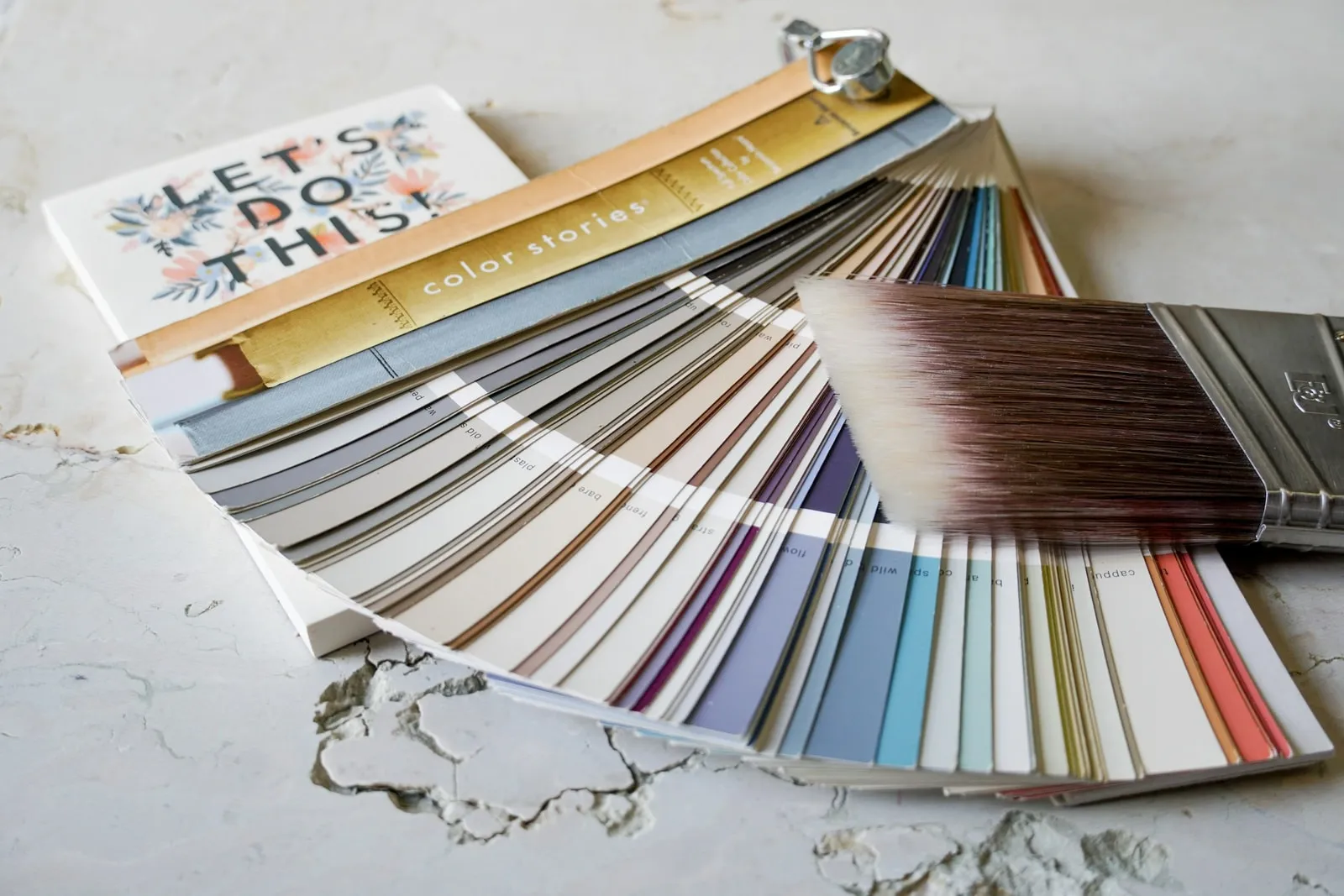
When it comes to renovation, one of the most important decisions you have to make is choosing the colour scheme to paint. Painting is one of the most immediate and significant changes that can transform the look and feel of your home interior and décor. Done right, the colour scheme of your home can vastly enhance and complement the overall look.
This article is divided into two main parts. The first discusses painting a new house. The second covers repainting your existing house.
DIY vs professional painting
The first question you’re probably asking yourself is: do you want to go the DIY route, or like the vast majority, leave it to the professionals? It largely depends on whether you’re a hands-on person and have previous experience painting a house or apartment.
It also depends on the context. Let’s say you bought a home from the resale market and you’re not doing extensive renovations to the existing interior. Then a DIY project sounds sensible and manageable, if you have the time.
However, if you’ve recently purchased a brand new unit that requires substantial renovations, leaving the painting to the professionals makes more sense. Coordinating the various aspects of your home renovation can be quite challenging.
On average, if you’re renovating substantially, the cost of painting a home under 1500 sqft shouldn’t cost more than an additional $2000.
Estimate cost for painting services
Here’s a guide for the estimated cost of professional painting. While this can vary from company to company, as well as with the type of paint used, it provides a general guide for your rough estimate.
Note: some companies may charge additional costs for the painting of sewage pipes, door frames, and metal gates.
HDB flats
- 2-room: $700
- 3-room: $800
- 4-room: $900
- 5-room: $1000
- EA: $1200
- EM: $1500
- Jumbo: $1700
Condominiums
- Under 700 sqft: $700
- Under 900 sqft: $900
- Under 1100 sqft: $1000
- Under 1300 sqft: $1100
- Under 1500 sqft: $1200
- Under 1800 sqft: $1400
Landed property: interior
- Inter-terrace: $2000
- Corner terrace: $2500
- Semi-detached: $2800
- Detached: $3800
- Good Class Bungalows: depends on size
Landed property: exterior
- Inter-terrace: $2000
- Corner terrace: $3500
- Semi-detached: $3800
- Detached: $5000
- Good Class Bungalows: depends on size
For a custom painting quote tailored to your home, send us your details through our quote form and we’ll get back to you.
Repainting an existing house
The fastest and cheapest way to dramatically change the look and feel of your home is to repaint the interior. Assuming you’re living in an HDB flat under 1200 sqft, this could reasonably be accomplished in under 4 days going the DIY route. Or, if you’re living in a larger home, you might consider painting just one room, like the living room.
Should you choose the hands-on approach, congratulations. Nothing beats the self-satisfaction of repainting your own house.
Make a plan
First, decide to what extent you want to paint. Would it be the entire house, or a selected few rooms? On average, you will probably be able to cover a maximum of 2 rooms per day if you’re painting all by yourself, so factor in the time it will take to paint the number of rooms.
Think about the colours and themes you want to create for the new home. Go through brochures and magazines for some insights. Generally, colours affect the mood of the room, so think about what kind of mood you’re after for each room. The colours you choose should also complement the general theme of your décor and fixtures.
When it comes to the bedrooms, make sure each occupant is happy with the colour chosen. It’s important that whoever lives in the room feels happy about the new colour scheme. Consider colours that reflect who you are, and apply the same thinking to other members of the family. You may also want to consider colours that are calming and easing, making sure the room feels just right and comfortable.
Colours and moods
It’s beyond the scope of this article to discuss in depth how colour affects our moods. Suffice to say, each of us has a generalisation of what colours represent to us. Here is a general guide of what colour psychology has found about colours and their associated moods.
Blue and purple
Blue: tranquility, calm, loyalty, stability, chill. Great for any room, particularly a boy’s room.
Purple: sophisticated, romance, luxury. In lighter shades like lilac or lavender, purple gives a calming effect similar to blue plus a hint of warmth.
Red and pink
Red: passion, intensity, aggression, excitement. Considered one of the most intense colours; probably not the best option to paint an entire room red.
Pink: gentleness, love, nurturing, calming effect. Suitable for a young girl’s room.
Yellow
Yellow: joy, optimism, happiness, vibrancy, youth, energising. Like a ray of sunshine, yellow is a cheerful colour for any corner of the house where you want a sense of joy and cheerfulness.
Green
Green: restful, refreshing, balanced. Considered the most restful colour to the eyes and suitable for any room.
White
White: purity, innocence, cleanliness, spaciousness. A safe neutral colour to fall back on when you’re unsure what colour to use; particularly useful in smaller rooms to create a sense of spaciousness.
Grey and earthy tones
Grey: cool, balanced, neutral, timeless.
Earthy: down-to-earth, stability, structure, support. Generally regarded as a safe colour for most rooms.
More colour palette ideas for the home
Our preferred choice of premium paint is Nippon Paint. They offer thousands of colour choices and shades. You may like to hop over to their colour creations page for more choices.
For more colour palette choices, drop by colorpalettes.net for their recommended colour combination charts.
Making a list
If you’ve read this far, you’re probably planning to go the DIY route. Congratulations on taking on such an ambitious project. Now that you have a plan in mind and the number of days needed to get the job done, it’s time to make a list of things you’ll need.
Too often, making a complete list dictates whether you’ll have everything you need when you need it, or whether you’ll need to make additional trips to purchase missing items. Make sure you have a checklist of items you will need before heading down to the hardware shop.
Your comprehensive checklist
Here is a non-exhaustive list of painting supplies you will need:
- Paint
- Paint remover
- Painting brushes of different sizes, plus rollers
- Painting trays
- Painting tape: great for painting edges
- Scraper: for scraping off peeling paint or patching up holes
- Wall putty: to patch any holes
- Sandpaper: for smoothing out surfaces you have patched
- Soap and water: to clean off grease, dirt, and stains from surfaces before painting
- Rags: lots of them
- Ladder and stools
- Large plastic sheets to protect floors and furniture
Taking action
Now that you have your checklist in place, it’s time to head to your local hardware or paint shop and grab what you need. If you’re unsure how much paint is needed, always check with the vendor; they have a pretty good idea of what’s required.
Also factor in the number of coats needed. If your existing paint is of a darker tone and you’re planning on changing to a lighter tone, consider a base coat of white to achieve the desired outcome. While this is not always necessary, it will save you the agony of completing your paint works and realising it’s not exactly what you wanted.
Another fail-safe option is to paint over a small area first. Wait until the paint is completely dry, then determine if it’s exactly the colour effect you’re after.
Happy painting
If you have read this complete article and felt excited about your upcoming adventure of DIY painting, go for it. By now, you’re well equipped with the theoretical side of choosing your colour scheme and painting your home. We wish you happy painting.
For more helpful information, consider reading the five essential steps to choosing paint colours for your home interior in terms of the mindset you should adopt when taking on DIY painting.
However, if you’re exhausted just from reading this all-inclusive article, then perhaps you should consider engaging a professional for the job. Quite frankly, reading this article is probably the easiest part of the entire project to paint your home.